
Cellulose and fiberglass
Blown-In Insulation in Sulphur Springs, TX
The least expensive way to deepen an attic, done after the leaks are sealed.
- Free on-site estimates
- Foam type, inches and R-value listed for every area
- Leaks, damp wood and duct problems pointed out before we insulate
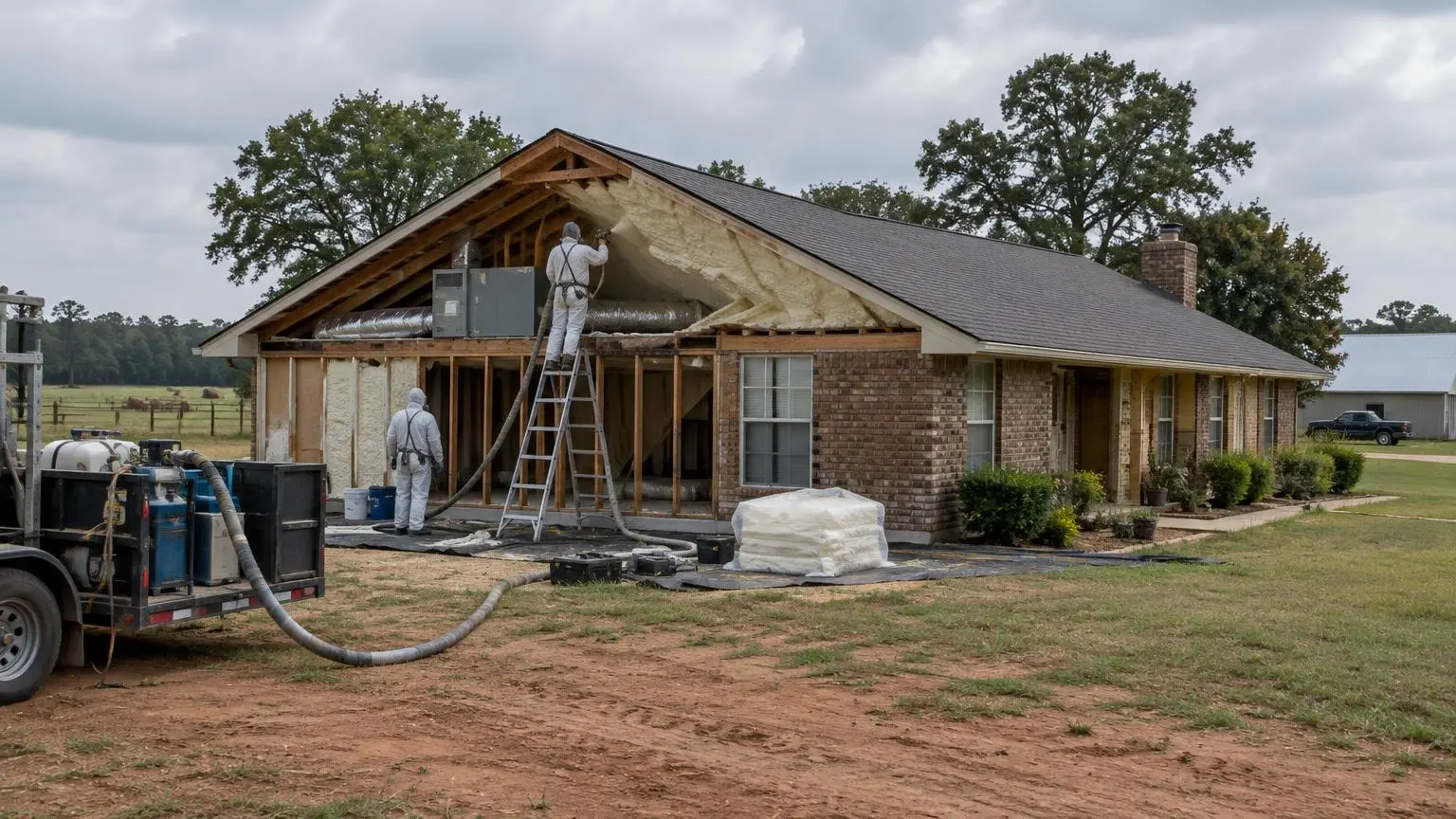
When Blown-In Beats Foam
Blown-in insulation is loose cellulose or fiberglass fed through a hose and blown across the attic floor or into closed wall cavities. It fills around wiring, framing and odd corners better than batts, and it is the least expensive way to get an attic up to a high R-value. In a lot of Sulphur Springs houses with the ducts inside, or with only a few runs across the attic, a sealed ceiling with deep blown-in does about as much for comfort as foam on the roof deck for much less money.
Cellulose or fiberglass
Cellulose is mostly recycled paper treated for fire and pests. It is dense, packs well around obstructions and slows air movement a bit better than loose fiberglass. Fiberglass is lighter, does not absorb water, and does not settle as much over time. Both work. Fixr lists blown fiberglass at $1.65 to $2.60 per square foot and cellulose at $1.75 to $3.80. We recommend one based on the attic and your preference, and the quote names the product and depth.
Seal first, then blow
Blown-in slows heat but not air. Lay it over open gaps at the tops of walls, plumbing stacks and light fixtures, and air keeps leaking through it. Every blown-in attic we do starts with sealing those leaks, plus the hatch and duct boots. Then we fit baffles at the eaves so the soffit vents stay open, blow to the target depth, and set depth rulers so you can see it later. ENERGY STAR's target for an uninsulated Zone 3 attic is R-49, and R-38 when topping up three to four inches.
Blown-in walls
Older houses with empty wall cavities can be dense-packed with cellulose through small holes drilled from outside or inside, then patched. HomeGuide puts dense-pack cellulose at $1.60 to $4.20 per square foot. It is a good option when you do not want to open the walls. We check for fire blocking, old wiring and siding type first, because those decide whether it is practical and how the patches will look.
When blown-in is not the answer
If the air handler and long duct runs are in the attic, blown-in on the floor leaves them in the heat. A cathedral ceiling with no attic leaves nowhere to blow. A low-slope roof with no room to move may need foam instead. We will tell you which applies to your house.
Where Blown-In Goes
Most of these jobs start with sealing, and the quote shows each part.
Attic top-ups
Adding depth over existing dry insulation.
Full attic installs
Blowing to target depth after removal or in new attics.
Dense-pack walls
Cellulose packed into closed wall cavities.
Additions and knee walls
Filling hard-to-reach spaces in add-ons.
Garage ceilings
Blown-in above garages under living space.
Hatch and baffles
Insulated covers and eave baffles that make the job last.

Published Blown-In Insulation Costs
| Job | Range and source |
|---|---|
| Blown-in, per sq ft | $1.00 to $2.80 (HomeGuide); $1.65 to $3.80 (Fixr) |
| Attic | $900 to $3,600 (HomeGuide); $1,750 to $5,500 for about 1,500 sq ft (Fixr) |
| Exterior walls | $1,900 to $7,800, $1.10 to $3.70 per sq ft (HomeGuide); $2,000 to $4,000 (Fixr) |
| Dense-pack cellulose | $1.60 to $4.20 per sq ft (HomeGuide) |
| Fiberglass / cellulose | $1.65 to $2.60 / $1.75 to $3.80 per sq ft (Fixr) |
| Typical job | $800 to $3,000 (HomeGuide); $3,000 to $7,000 (Fixr) |
HomeGuide (November 2025) and Fixr (August 2025) publish these national ranges. The depth, attic access, how much sealing is needed and any removal set the final figure, and that figure is the one on your written estimate.
How a Blown-In Job Runs
1. Check the attic
Measure depth, find leaks, look for moisture and pests.
2. Seal
Close gaps at wall tops, pipes, wires, fixtures, boots and the hatch.
3. Baffle
Fit baffles at the eaves to keep vents clear.
4. Blow and mark
Blow to the quoted depth and set rulers so it can be checked.
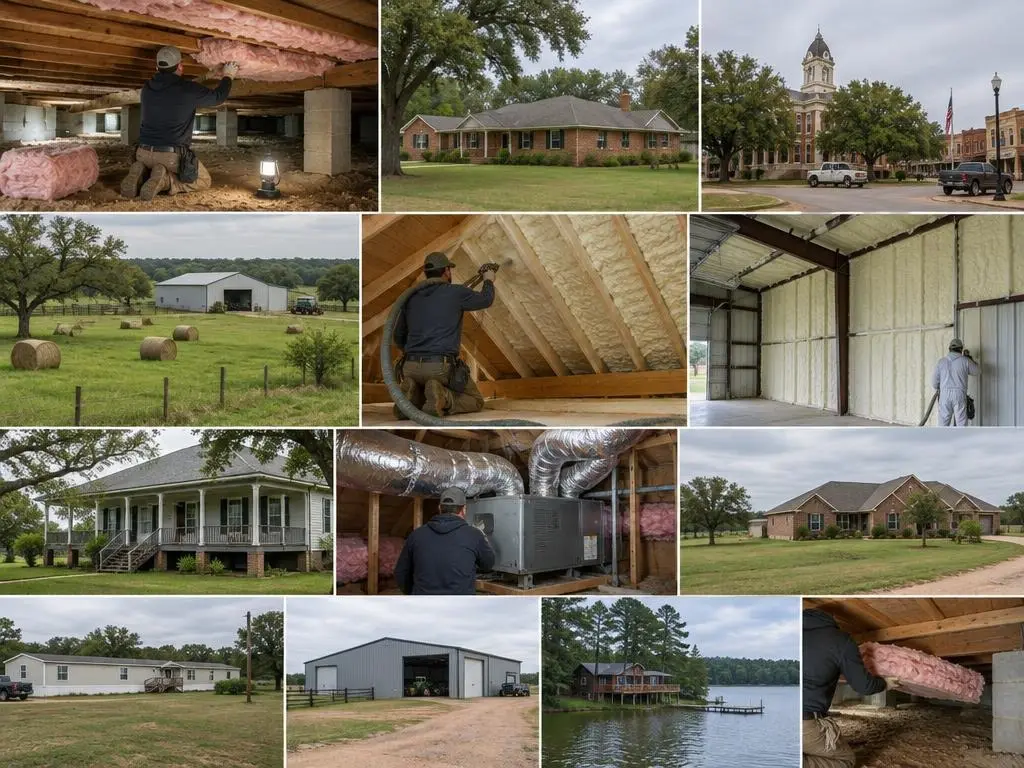
Why Choose Us for Blown-In Insulation
Sealing included
Blown-in without sealing is a half job; ours starts with sealing.
Depth you can verify
Rulers stay in the attic after we leave.
Product named
The quote lists the material and the depth for its R-value.
Blown-In Insulation Questions
Is blown-in or spray foam better for an attic?
It depends on where the ducts are and what the attic looks like. With ducts inside the house, a sealed ceiling with blown-in is usually the better value. With the air handler in the attic, foam on the roof deck often makes more sense.
Does blown-in insulation settle?
Some, especially cellulose. Installers allow for that by blowing to a slightly deeper initial depth listed on the bag.
Can you blow insulation over old insulation?
Yes, if the old material is dry and free of mold and droppings.
How long does a blown-in attic take?
Most single-family attics take a day or less, including the sealing.

Blown-In Insulation Service Areas
- Spray Foam Insulation in Sulphur Springs, TX
- Spray Foam Insulation in Cumby, TX
- Spray Foam Insulation in Mount Vernon, TX
- Spray Foam Insulation in Winnsboro, TX
- Spray Foam Insulation in Quitman, TX
- Spray Foam Insulation in Yantis, TX
- Spray Foam Insulation in Emory, TX
- Spray Foam Insulation in Cooper, TX
- Spray Foam Insulation in Commerce, TX
- Spray Foam Insulation in Greenville, TX
- Spray Foam Insulation in Mount Pleasant, TX
- Spray Foam Insulation in Pittsburg, TX
- Spray Foam Insulation in Paris, TX
Get a Blown-In Insulation Estimate
Ask for a blown-in quote and we will measure the attic and price it in writing.